

Toyota Hybrid, PHEV, & EV Models
The right Toyota powertrain depends on how you drive, where you park, and how much attention you want to give charging. This guide covers the basics and finishes with a practical way to match a powertrain to your routine. If you’d like to look at options as you read, you can browse electrified Toyota models in our new inventory.
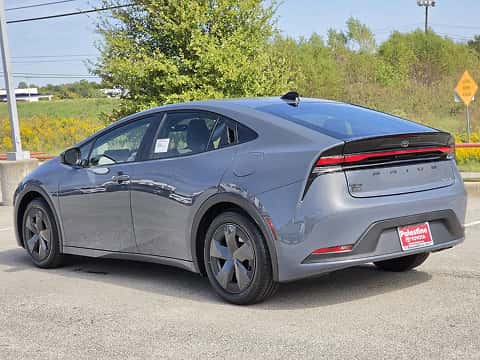
Electrified Toyota Powertrains Explained for East Texas Drivers
“Electrified” covers several powertrain types, and some of them never plug in. We’ve sorted them by energy source, charging or fueling needs, and what each means for daily driving around Palestine, TX and the rest of East Texas. The framework is our own, meant to keep the choices simple.
Hybrid (HEV): Self-Charging Efficiency
A hybrid electric vehicle pairs a gasoline engine with battery-powered electric motors. There is no plug. Regenerative braking captures energy as you slow down and sends it back to the battery, and the engine can top it up too.
“Self-charging” doesn’t mean free energy; you still buy gasoline. The efficiency comes from managing engine use and recovering energy that braking would otherwise waste. A Toyota hybrid starts, refuels, and drives like a gas-only Toyota, with better estimated MPG. For most drivers, the routine stays the same.
Plug-In Hybrid (PHEV): Electric Miles With Gas Flexibility
A plug-in hybrid carries a larger battery, so it travels farther on electric power alone than a conventional hybrid. EV mode, meaning driving on battery power only, works while there is usable charge. Once that charge is gone, the vehicle runs like a regular hybrid. The engine may also kick in under certain conditions before that point.
Plugging in restores more electric driving, so regular charging is what makes a PHEV worthwhile. If you rarely plug in, a standard hybrid may suit you better.
Battery Electric (BEV): Zero Tailpipe Emissions
A battery electric vehicle (BEV) uses electric motors in place of a gas engine. Torque is smooth and almost instant, and the ride is quiet. A BEV cuts CO2 emissions, but “zero tailpipe emissions” doesn’t mean zero environmental impact, since electricity generation and vehicle production also play a part.
With a BEV, charging becomes part of your routine. You can charge at home or at public stations.
Toyota Electrified Lineup by Powertrain
If you’ve wondered what electric vehicles Toyota makes, or whether Toyota has any BEVs, the lineup includes hybrids and plug-in hybrids alongside battery electric models. Body style matters as much as powertrain, since seating and cargo space shape daily use, and so do parking needs. All figures below are Toyota’s estimated city/highway MPG, and we label model years because 2026 and 2027 entries are listed separately. Features and availability vary by trim.
Hybrid Cars, Crossovers, and Minivans
Smaller hybrids lean toward commuting efficiency and easy parking. The 2027 Prius is rated 59/50, the 2027 Camry 52/49, and the 2026 Corolla Hybrid 53/46. Toyota lists the 2027 Prius and the 2027 Prius Plug-in Hybrid as separate entries, so check which one you’re looking at.
For more passenger and cargo room, the 2026 Corolla Cross Hybrid (46/39) and 2026 RAV4 Hybrid (47/40) are crossovers. Families who want sliding-door convenience can consider the 2026 Sienna minivan at 36/36. The 2027 Crown (42/38) and 2026 Crown Signia (39/37) round out the group with more upscale body styles.
Hybrid SUVs, Trucks, and Flagship Models
In larger vehicles, electrification supports torque and capability as well as efficiency, so a hybrid badge doesn’t mean every model has the same fuel-saving focus. The 2026 Highlander Hybrid is rated 35/35. The 2026 Grand Highlander Hybrid is rated 36/32 and seats up to eight.
The 2026 Sequoia is exclusively hybrid, with a 437-hp i-FORCE MAX powertrain and towing up to 9,500 lbs., at 21/24. The Land Cruiser pairs an i-FORCE MAX Hybrid powertrain (326 hp) with full-time 4WD and 6,000-lb. towing, rated 22/25. The 2026 4Runner (23/24), Tacoma (22/24), and Tundra (20/24) also offer i-FORCE MAX. Towing ratings are model and trim specific.
Plug-In Hybrid and Battery Electric Models
Toyota’s top picks for a PHEV are the RAV4 Plug-in Hybrid and the Prius Plug-in Hybrid. The 2027 Prius Plug-in Hybrid has a 44-mile EPA-estimated all-electric range. The 2026 RAV4 Plug-in Hybrid SE has a 54-mile EPA-estimated all-electric range and standard AWD.
On the battery electric side, the All-Electric Family includes the bZ and the bZ Woodland, plus the C-HR. The 2027 bZ is EPA-estimated at 314 miles (XLE FWD Plus) and 288 miles (XLE AWD). The bZ Woodland offers 281 miles with standard all-season tires, standard AWD, 375 total system horsepower, 3,500-lb. towing, and 8.4 inches of ground clearance. The 2027 C-HR is estimated at 287 miles (SE) and 273 miles (XSE).
If you’re comparing options, our current new vehicle specials page is a good place to check what’s available.
Hybrid vs. Plug-In vs. Electric: Side-by-Side Comparison
In short, a hybrid suits drivers who want better MPG with no change in routine. If you can charge regularly and want gas as a backup, a plug-in hybrid makes sense. A BEV is for people with dependable charging who want to go fully electric. The Mirai sits apart because of hydrogen fueling.
A hybrid fuels with gasoline and has no plug. It feels like a gas Toyota with automatic electric assist, which makes it a good fit for irregular schedules or no home charging. The main trade-off is that there’s no plug-in electric driving.
A plug-in hybrid uses both gasoline and electricity. It feels electric at first, then like a hybrid once the charge is depleted. It works best for drivers whose daily trips fit the electric range, and the benefit depends on charging often.
A BEV runs on electricity only. It feels quiet and quick off the line, and it suits predictable routines with reliable charging. The trade-off is that charging access becomes part of ownership.
Keep electric-only range separate from combined range, and remember MPG and MPGe aren’t interchangeable. Purchase price alone doesn’t decide affordability.
Ask yourself:
- How many miles do I drive each day?
- Can I charge at home or work?
- Do I tow or haul regularly?
- How often do I take long road trips?
Which Electrified Toyota Fits Your Commute on US-84, US-287, and TX-155
Begin with your real round-trip mileage, weekly errands, and parking setup. The road name matters less. East Texas has rural stretches and longer distances between towns, and summer heat adds to the picture. Air conditioning and sustained highway speeds can change energy use, and so can a full load of passengers or cargo.
For a daily town commute, a BEV or PHEV can fit well if you can charge at home. A hybrid works if you can’t. On a long highway commute, a hybrid is often the easiest fit, since it refuels like any gas vehicle.
Families hauling gear can look at a hybrid crossover, minivan, or three-row SUV, which cover seating and cargo first and powertrain second. Truck-minded drivers will find the i-FORCE MAX trucks and SUVs suit towing and hauling needs.
Public charging can be sparser in rural areas, so check compatible stations and backup stops before longer trips. Heat affects battery use in general terms, so treat advertised range as a rough estimate. Match vehicle size to your household first, then compare powertrains within that shortlist. If a used model fits your plans better, you can also look at our used vehicles.
Ownership Benefits: ToyotaCare Maintenance and Hybrid Battery Warranty
ToyotaCare is included at no additional cost with the purchase or lease of every new Toyota and covers normal factory-scheduled maintenance. Coverage varies by model year and vehicle type. For model years 2026 and earlier, it is 2 years or 25,000 miles, whichever comes first. For model years 2027 and newer, it is generally 1 year or 10,000 miles. New 2027 Toyota BEVs and PHEVs include ToyotaCare for 1 year or 10,000 miles, plus 3 years of 24/7 roadside assistance.
Toyota’s hybrid battery limited warranty is 10 years or 150,000 miles, whichever comes first. The EV drive components limited warranty runs 8 years or 100,000 miles, again whichever comes first. It covers the traction battery (if it remains below 70% of original capacity) along with the transaxle and the inverter with converter. Conditions apply. Roadside assistance, scheduled maintenance, and warranty coverage are separate benefits.
Hybrids and PHEVs still have gasoline engines and need their scheduled maintenance. BEVs skip engine oil changes but still need tires, inspections, and other care. Regenerative braking may reduce friction brake use, but brake inspections still matter. Our service department can help, and you can schedule service online. Ask us or check Toyota’s Warranty and Maintenance Guide for exact model-specific terms.
Charging Basics and Cost of Ownership
Charging comes in three levels. Level 1 uses a standard wall outlet, mainly at home. Level 2, a more powerful AC option, is found at homes and public stations. Level 3, also called DC Fast Charging, is usually the quickest. Don’t assume a PHEV can use DC Fast Charging, since capability varies by vehicle.
Level 2 can take a BEV from 10% up to a full charge in around seven hours with the 11-kW onboard charger. DC Fast Charging can go from 10% to 80% in around 30 minutes under ideal conditions. A professionally installed Level 2 charger can fully charge the RAV4 Plug-in Hybrid in approximately 2.5 hours under ideal conditions (240V, 32A). Times vary with conditions.
Toyota BEVs and PHEVs include a dual-voltage charging cable for Level 1 and Level 2 home charging. 2026 BEVs have a NACS port and include separate CCS1 and J1772 adapters.
On cost, home charging savings depend on location, and Toyota says BEVs may have lower overall service and maintenance costs. Incentives may be available depending on location, so confirm eligibility with us or a tax professional. Questions about pricing are best answered with a model-specific estimate, and you can explore financing options with us.
Common Questions About Electrified Toyotas
Do hybrids need plugging in? No. A hybrid recharges its battery through braking and engine power.
Can a PHEV run without charging? Yes. When the charge is used up, it runs like a regular hybrid, though plugging in restores more electric driving.
Where can a BEV charge? At home or at public stations.
What affects BEV range? Speed, outside temperature, and accessory use all play a part, along with driving conditions and charging habits. Battery capacity also decreases with time and use.
Does a new Toyota include scheduled maintenance? Yes, through ToyotaCare, with terms that vary by model year and vehicle type, as covered above.
Is a hydrogen Toyota practical in Texas? For most East Texas readers, no. Toyota identifies the Mirai as offered in California.
Is a hybrid battery expensive to maintain? Toyota’s hybrid battery limited warranty runs 10 years or 150,000 miles, whichever comes first. Ask us about your model’s exact terms.
Explore Electrified Toyotas at Palestine Toyota on Loop 256
Not sure which powertrain fits? Talk to us. A test drive is the easiest way to feel the difference between a hybrid, plug-in hybrid, and battery electric Toyota. Bring your daily mileage and your passenger and cargo needs, plus a sense of your charging access and any longer trips you take, and we’ll help you compare.
Palestine Toyota is a trusted full-service Toyota dealership serving Palestine, Texas and surrounding communities, at 2728 TX-256 Loop, Palestine, TX 75801. Sales hours are Monday to Friday 9am to 8pm and Saturday 9am to 6pm. We are closed Sunday. Call sales at 903-480-9390 or contact us to schedule a test drive.
0 comment(s) so far on Toyota Hybrid, PHEV, & EV Models